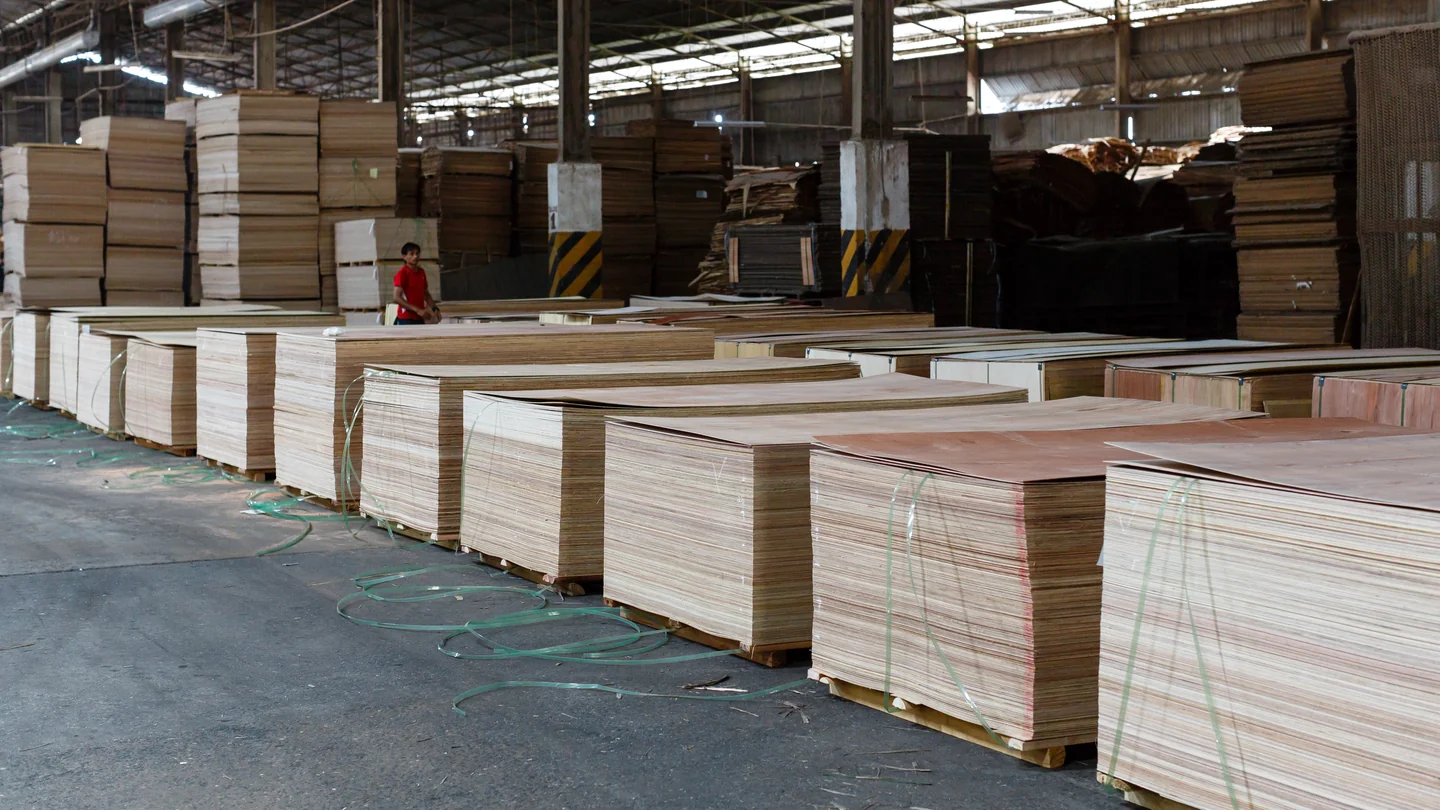
Start with the finished flooring panel
Define the finished dimensions and thickness range, including any trimming allowance between the pressed blank and saleable panel. Record the expected mix of sizes and thicknesses rather than designing around a single product if the mill expects frequent changeovers. Large-format panels can affect platen dimensions, loading clearance, transfer support and the space needed for stacking.
Describe the panel construction in terms of veneer grades, thicknesses, face requirements and the number and orientation of plies. Plies describe veneers, not press openings or daylights. The cross-ply order and glue distribution are lay-up decisions; the press must accommodate the assembled panel and the mill’s qualified pressing process. Surface treatment or overlay requirements should be distinguished from the initial hot pressing of a glued veneer lay-up.
| Target to define | Why it matters to equipment | Buyer evidence |
|---|---|---|
| Finished length and width | Platen coverage, loading and trimming allowance | Product drawing and tolerance |
| Thickness and product mix | Daylight clearance and changeover plan | Thickness schedule |
| Veneer lay-up | Lay-up method and batch consistency | Ply schedule and veneer details |
| Shift output | Press openings and handling-cycle balance | Target by product and shift |
| Surface requirement | Whether a separate finishing or overlay stage is needed | Surface specification |
Translate construction into a pressing route
Plywood production separates veneer lay-up from hot pressing. Veneers are assembled in the required cross-ply order with controlled adhesive application, then transferred to the press. Any cold pre-press is a distinct upstream operation used where the process requires it; it does not replace the hot press. After pressing, panels may need cooling, trimming, sorting and stacking, with the exact scope depending on the mill’s existing line.
Container flooring products can require large panel formats and controlled thickness, so the equipment proposal should be based on the actual lay-up and product schedule. Confirm whether loading is manual, batch automated or shared between presses. Specify the transfer and support method for the panel size, and check that unloading and downstream handling can keep pace. Do not assume a press supplier’s line includes veneer preparation, lay-up, trimming or stacking unless each item is explicitly listed.
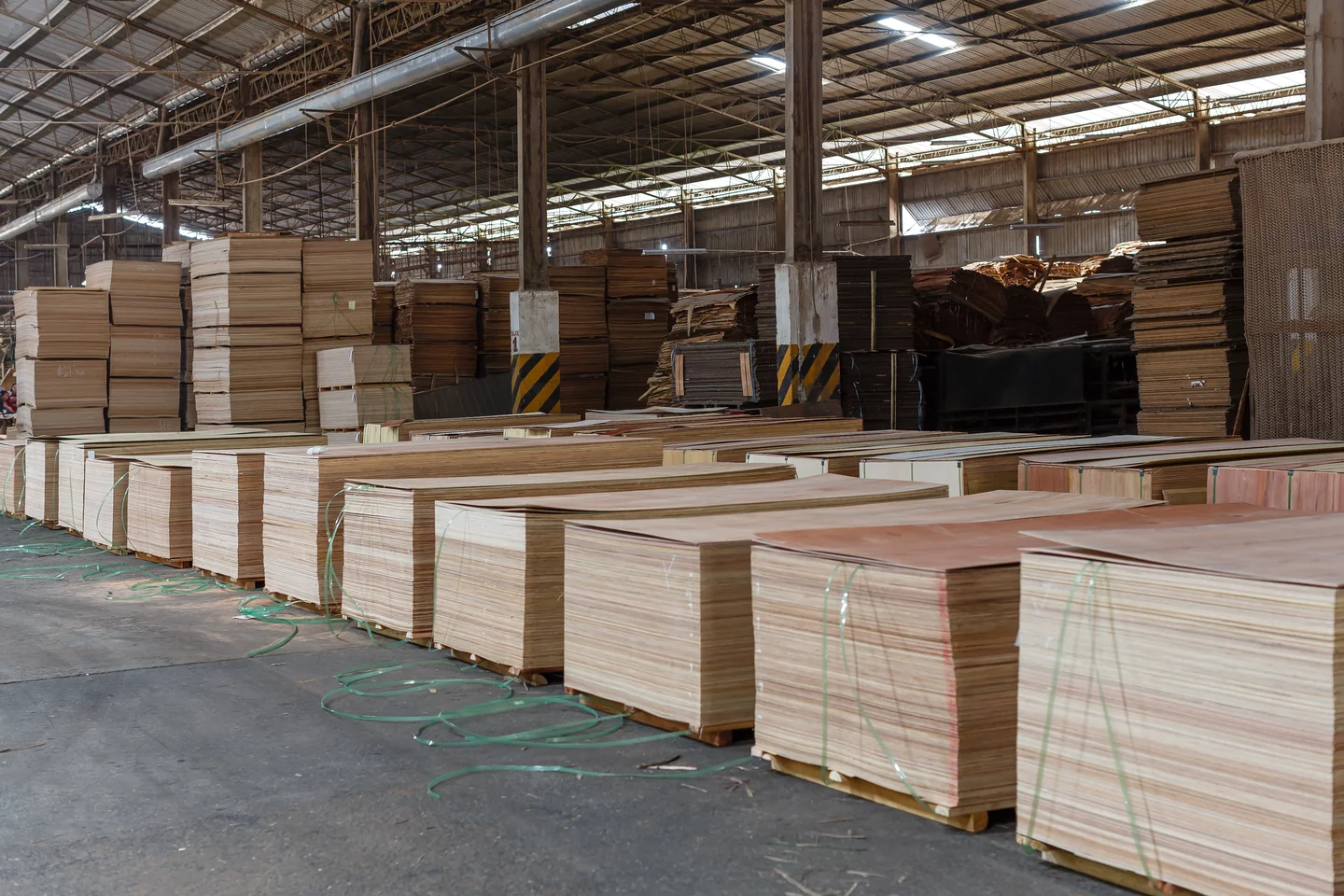
Size press and handling around the targets
Platen length and width must be assessed against the pressed blank, not only the nominal finished dimensions. Include edge clearance, loading method and trimming allowance. Daylight opening is the available vertical space for loading a lay-up; openings or daylights describe press capacity, while veneer plies describe panel construction. Check the opening pitch and loading clearance against the stack height and handling equipment.
For a multi-daylight press, estimate output using effective openings, panels per opening, complete cycle time and expected utilization. A complete cycle should include loading, closing, pressing, opening, unloading and associated reset or travel when those tasks fall within the measured interval. Avoid counting the same handling time twice. Press force and loaded area also require engineering review; in a stacked multi-daylight press with equal loaded area transmitted through series, force is not multiplied by the number of openings. Unequal or multiple loads, frame design and cylinders require confirmation.
The press is only one part of the capacity decision. Compare its batch interval with loader service time, upstream lay-up supply and outfeed capacity. If one handling system serves several presses, assess travel time and scheduling conflicts as well as nominal cycle times. Output calculations are preliminary planning estimates, not performance guarantees.
Samples, testing and buyer acceptance
Before final equipment selection, provide representative product drawings and a clear lay-up description. Confirm the intended veneer condition, adhesive process and pressing parameters with the mill’s process team; these are product-specific and should not be inferred from generic equipment information. Where practical, use representative lay-ups and agreed measurement methods to evaluate panel dimensions, thickness consistency, bonding and surface condition.
Agree acceptance criteria before ordering. Identify which party supplies samples, what instruments and methods will be used, how many panels or cycles are included, and how results will be recorded. Separate equipment checks—such as platen dimensions, opening clearance, loading sequence and control interfaces—from product checks. Do not treat an equipment quotation as proof of end-use compliance or certification. All unprovided operating data and acceptance thresholds are To confirm.
Specify scope and interfaces clearly
A useful request for quotation states the target panels, product mix, expected shift schedule, existing equipment and desired supply boundary. Ask suppliers to identify included and excluded equipment, utilities, controls, guarding, installation responsibilities and interface requirements. For an existing mill, provide measured layout drawings and press details so handling equipment can be checked against real clearances and control signals.
We help plywood mills specify and source equipment configurations, coordinating the requirements with the relevant equipment suppliers. The proposed arrangement should remain tied to confirmed panel dimensions, process data and site conditions. Final specifications, availability and interfaces are To confirm with the selected supplier and engineering team.
Questions about this configuration
Does the number of veneer plies determine the number of press openings?
No. Plies are veneers within a panel; openings or daylights are the press’s loading spaces. Specify both independently: the veneer schedule defines construction, while the press opening count affects batch capacity and handling.
Can a multi-daylight press force be multiplied by the number of openings?
Not for the usual equal-area loads transmitted through a stacked press in series. Force is not multiplied by openings in that model. Confirm the actual loading arrangement, frame and cylinders with the press engineer.
What information should a mill provide for a container flooring plywood proposal?
Provide finished and pressed panel dimensions, thickness range, veneer lay-up, product mix, target shift output, trimming allowance, existing process and site layout. Identify required testing and acceptance criteria; missing values are To confirm.