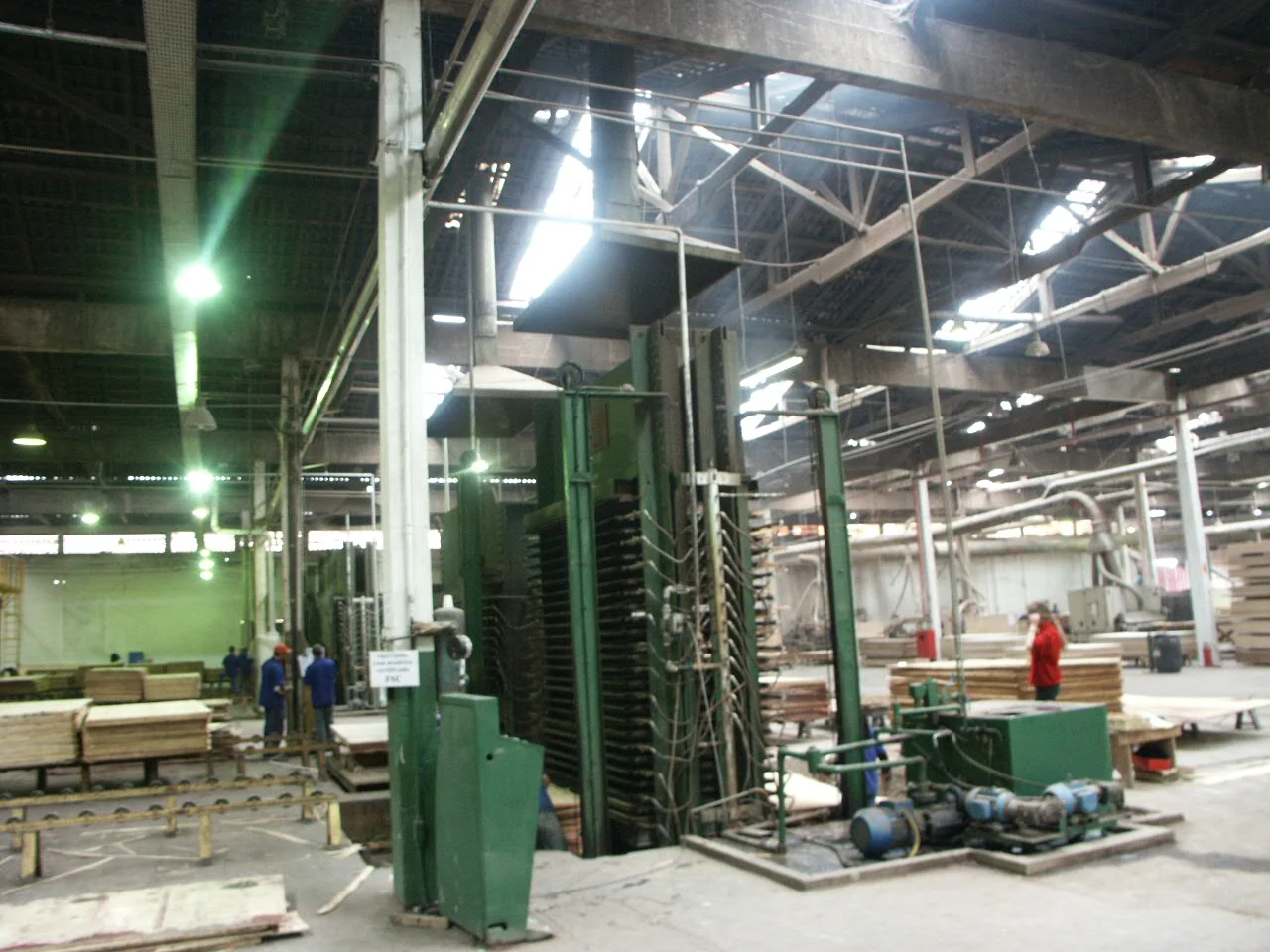
Plywood Press Lines
Coordinate pre-pressing, loading, hot pressing and outfeed around your panel sizes.
Custom plywood press lines, automatic loading systems and long-platen LVL presses for new and existing mills.
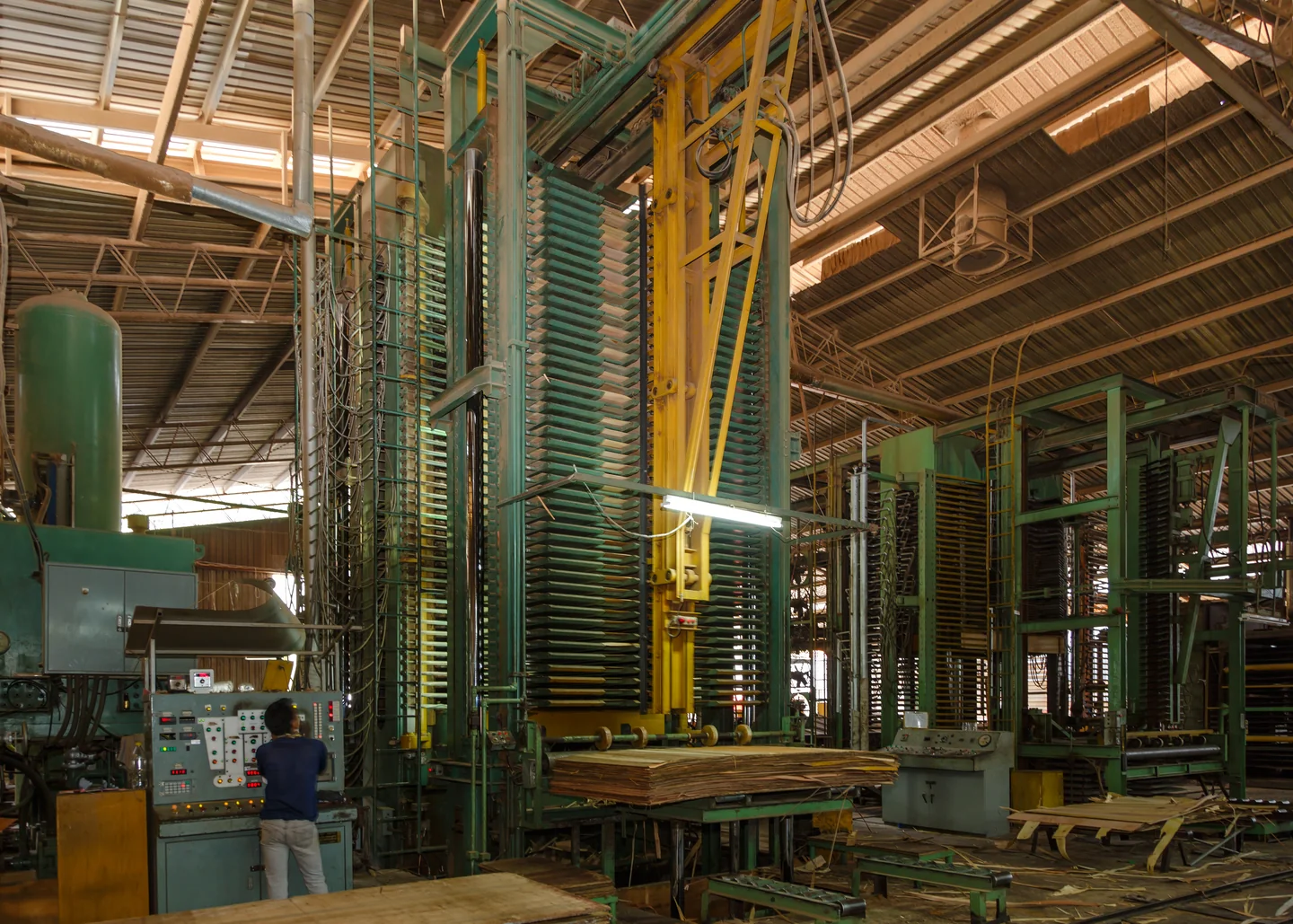
Coordinate pre-pressing, loading, hot pressing and outfeed around your panel sizes.
Add automatic loading and unloading to a new or existing plywood press.
Configure pressing and handling equipment for long laminated veneer lumber billets.
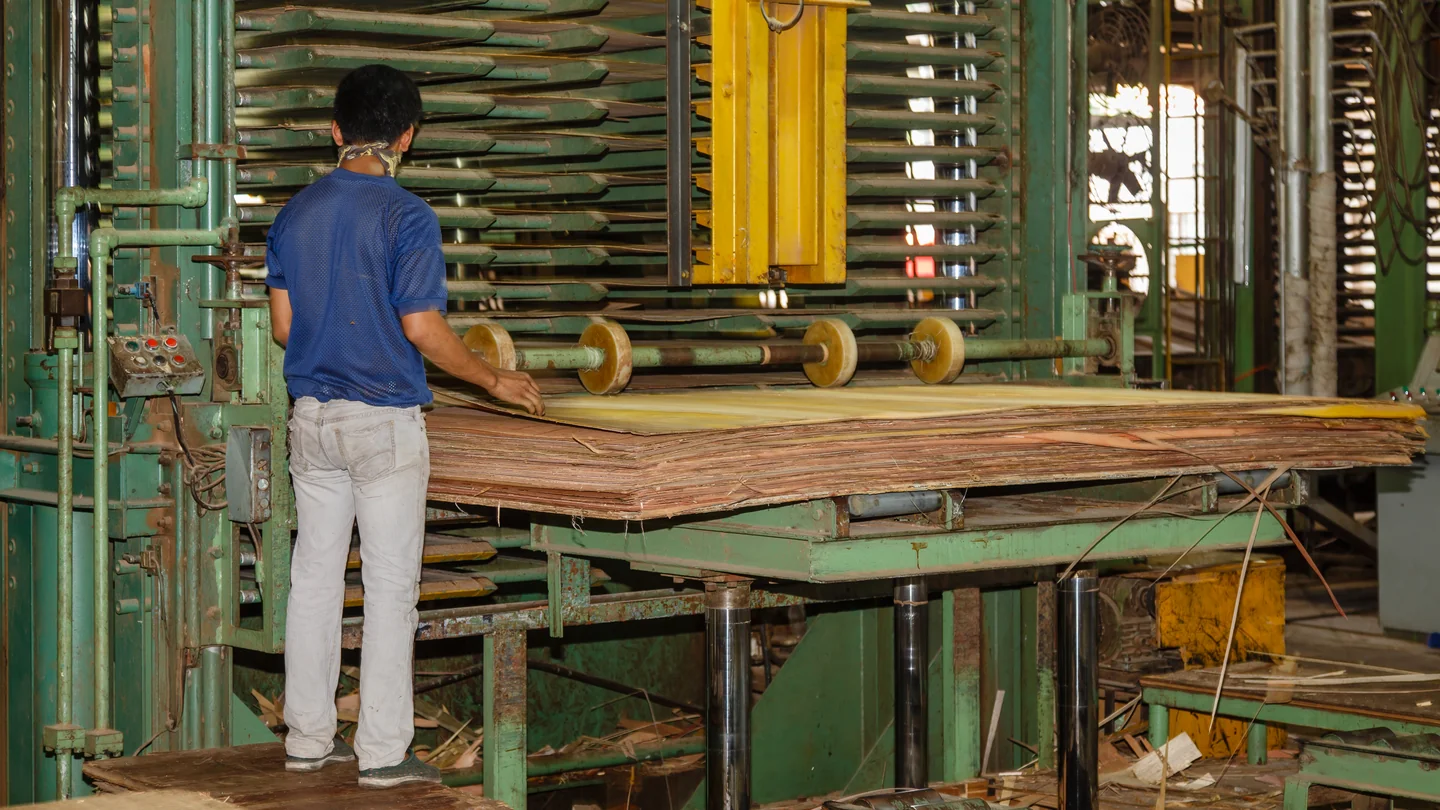
You may not need to replace the press to improve the way panels move through it.
Send us photographs of your existing press, your panel dimensions and the number of openings. We will review loading geometry, transfer space and the interfaces for an automatic or shared handling system.
Send Your Press Photos One loading system for multiple presses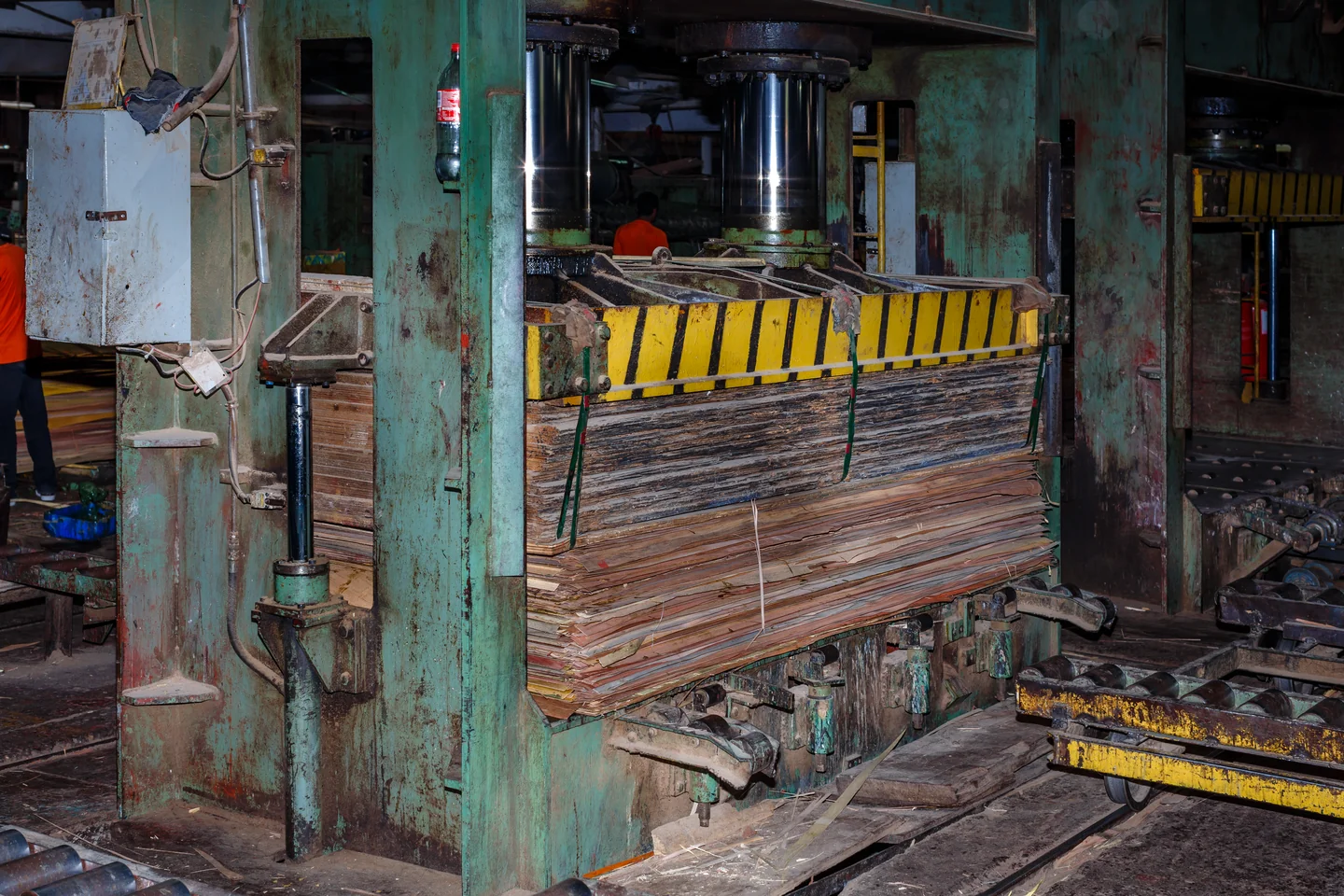
An automatic plywood hot press loader transfers prepared veneer lay-ups into the open press daylight, positions each charge against a defined datum, and coordinates the batch…
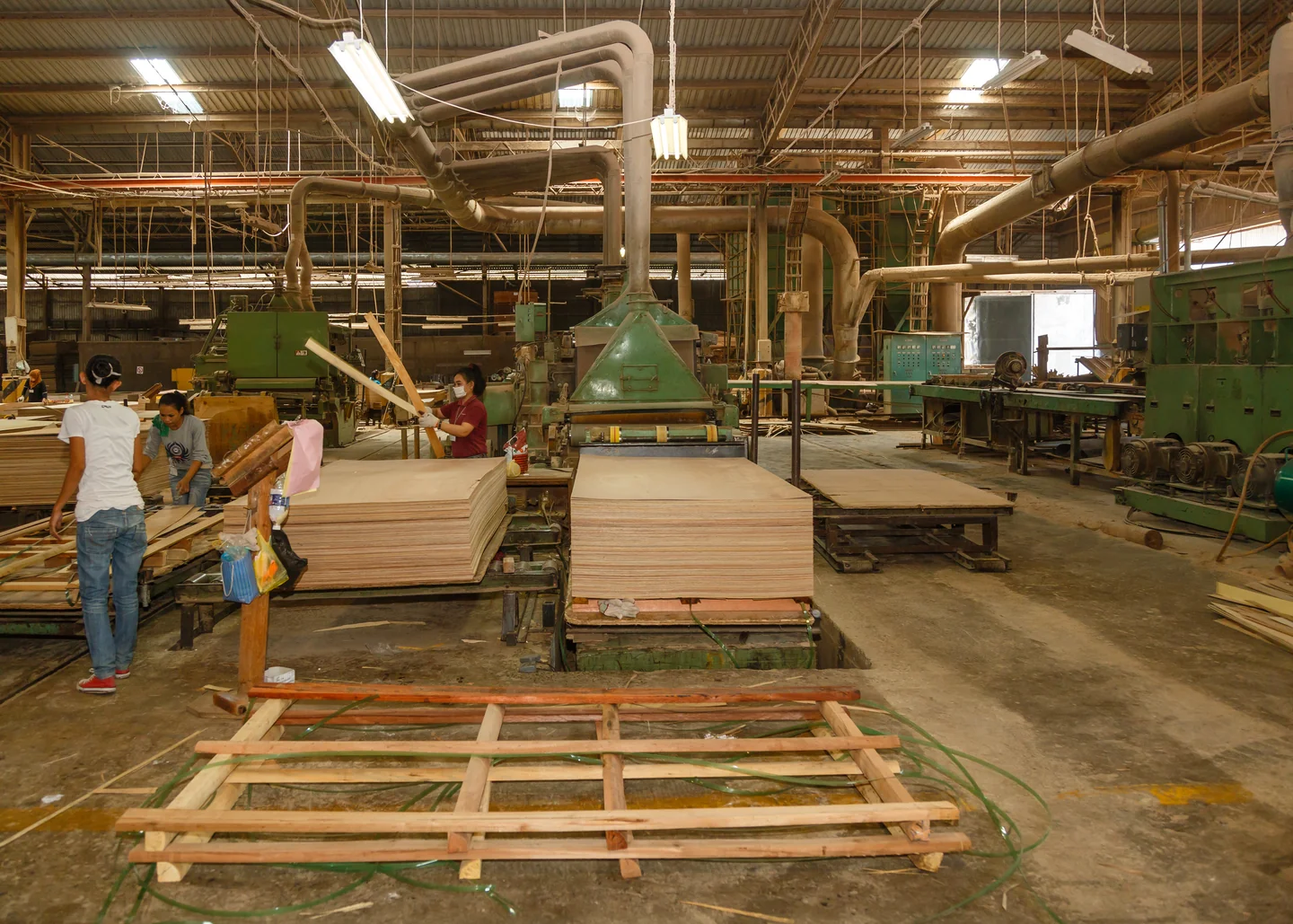
A pressing section works when each transfer supports the next operation. Check prepared lay-up condition, the press loading window, and how finished panels leave the line before you add equipment.
Illustrative sequence. Cooling, sanding and finishing interfaces are confirmed against the product recipe and agreed scope.
Begin with the product, then define the pressing and handling requirements.
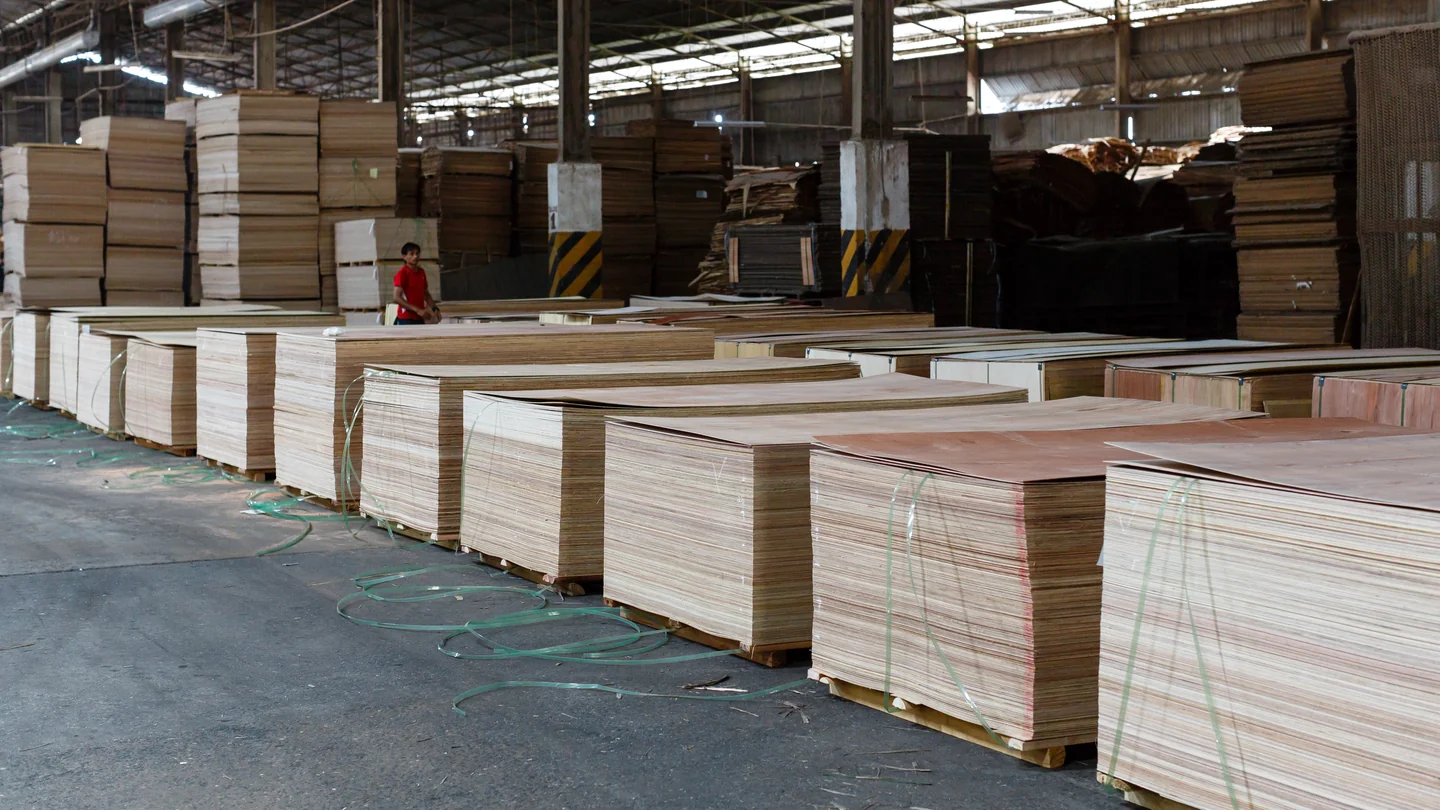
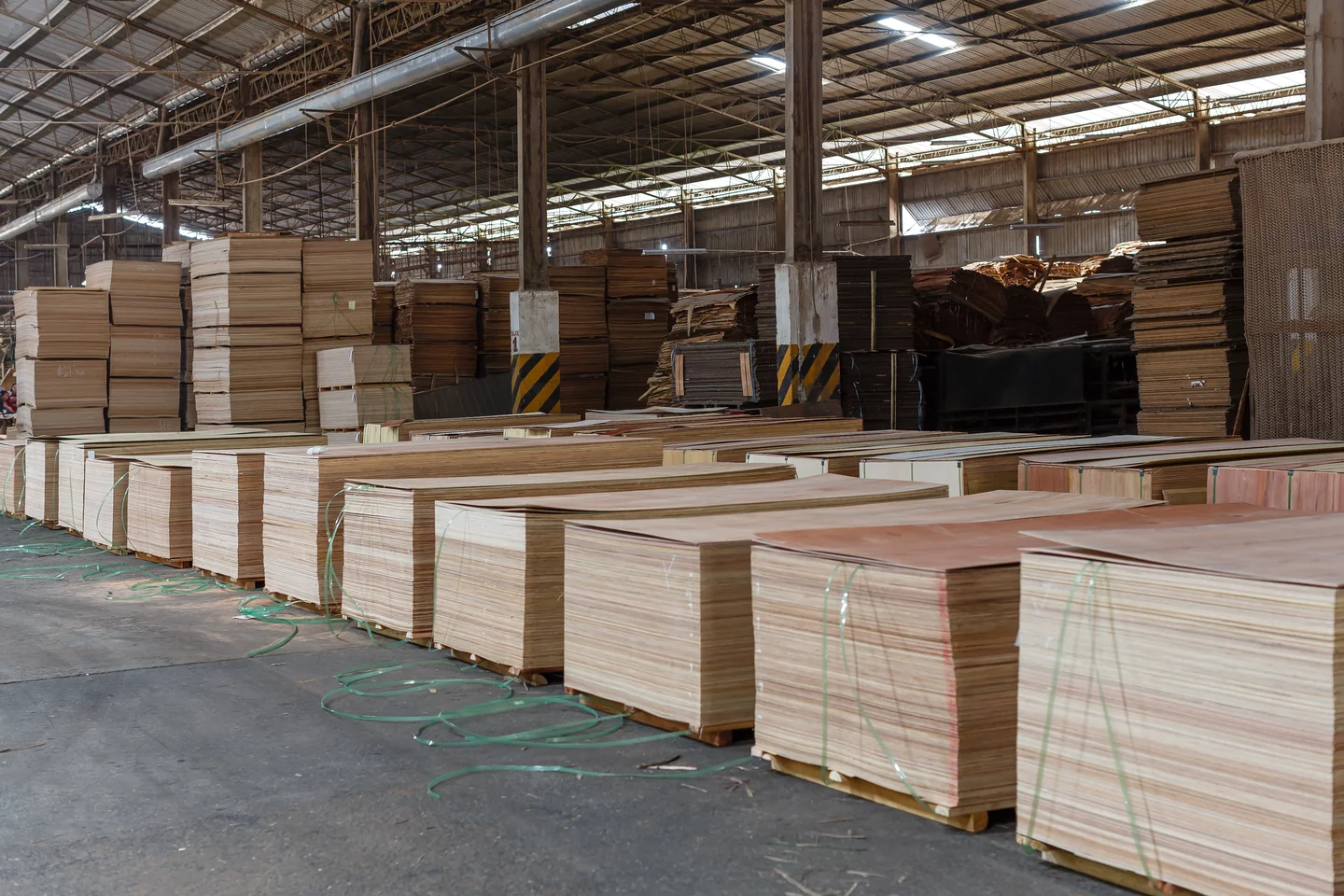
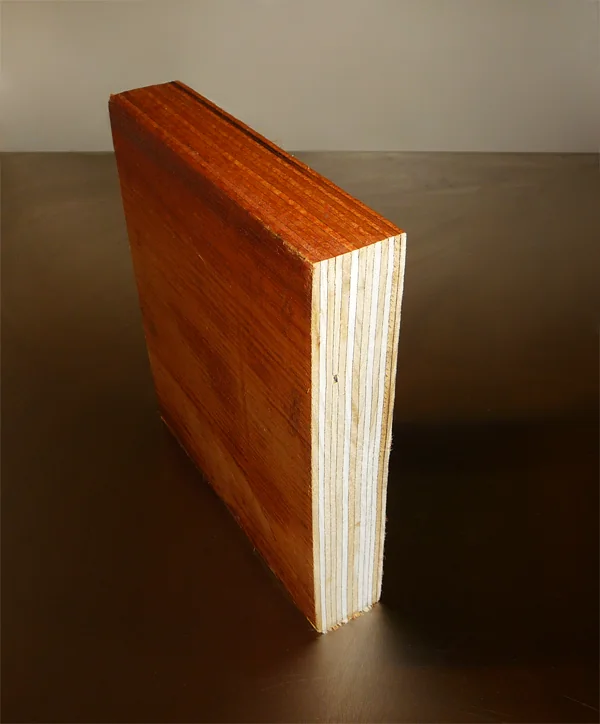
Film-faced plywood panels combine a veneer-based plywood core with a bonded surface film.
Plywood pressing lines combine veneer lay-up, press loading, hot pressing and panel discharge into a coordinated production sequence. The right arrangement depends on panel dimensions, lay-up construction, target output and the mill’s existing floor plan and equipment. We help plywood mills specify and source presses and wood-panel handling automation, from press-section planning to selected infeed and outfeed systems. The scope should be defined clearly: lay-up and hot pressing are separate operations, and downstream finishing may be supplied as a separate package.
Start with the product range: finished panel length and width, thickness, veneer lay-up, batch size and planned mix. Platen dimensions must accommodate the loaded lay-up and any required trimming allowance; finished panel size alone does not establish the required platen size.
For multi-daylight presses, openings describe the spaces available for loaded batches. Confirm daylight clearance, loading method and panel handling envelope together. Force selection depends on loaded area and the required specific pressure; in a stacked press, do not multiply the required force by the number of openings.
| Planning item | What to confirm |
|---|---|
| Panel range | Finished dimensions, thickness and product mix |
| Lay-up | Veneer sequence, batch arrangement and transfer method |
| Press geometry | Platen size, opening count and daylight clearance |
| Handling | Loading, unloading, buffers and stacking scope |
Plywood production typically forms a glued veneer lay-up in the required cross-ply order, transfers it to the press, completes the hot-press cycle, then removes and stacks the panels. Lay-up equipment and hot pressing perform distinct jobs. A cold pre-press may be included where the process requires it, but it does not replace the hot press.
Automation should be balanced around the press batch interval. Loader service time, travel, press access and outfeed capacity can constrain the line even when the press itself has available capacity.
For a new line, define the required boundary from lay-up transfer through press loading and discharge, then state whether trimming, sorting or stacking is included. For a retrofit, document press openings, daylight pitch, existing loader access, floor levels, available travel paths and control interfaces before selecting equipment.
A shared loader serving multiple presses needs a schedule that accounts for travel and overlapping loading and unloading demands. Layout drawings and measured cycle times help identify conflicts; assumed planning figures should not be treated as guaranteed output.
Provide representative panel specifications, lay-up and batch details, current cycle observations, target shift schedule and a site layout. Ask suppliers to state the supply boundary, required utilities, interfaces, exclusions and the assumptions behind capacity estimates. Confirm any dimensions, performance, availability or acceptance criteria not provided in the project data before selection.
No. Openings, or daylights, are press spaces that receive loaded batches. Plies are the veneer layers in a panel lay-up.
Not necessarily. Lay-up and hot pressing are separate process steps. Confirm whether veneer assembly, transfer, pre-pressing and press handling are included in the quoted scope.
Share the effective openings, panels per opening, complete measured cycle time, shift hours and a realistic utilization assumption. The estimate is preliminary and depends on the actual product mix, handling sequence and operating conditions.
A photograph of your existing equipment, a target panel size or an initial mill layout is enough to start a conversation.
New lines. Existing presses. Long-length LVL.
One project contact, a clearly defined equipment scope.