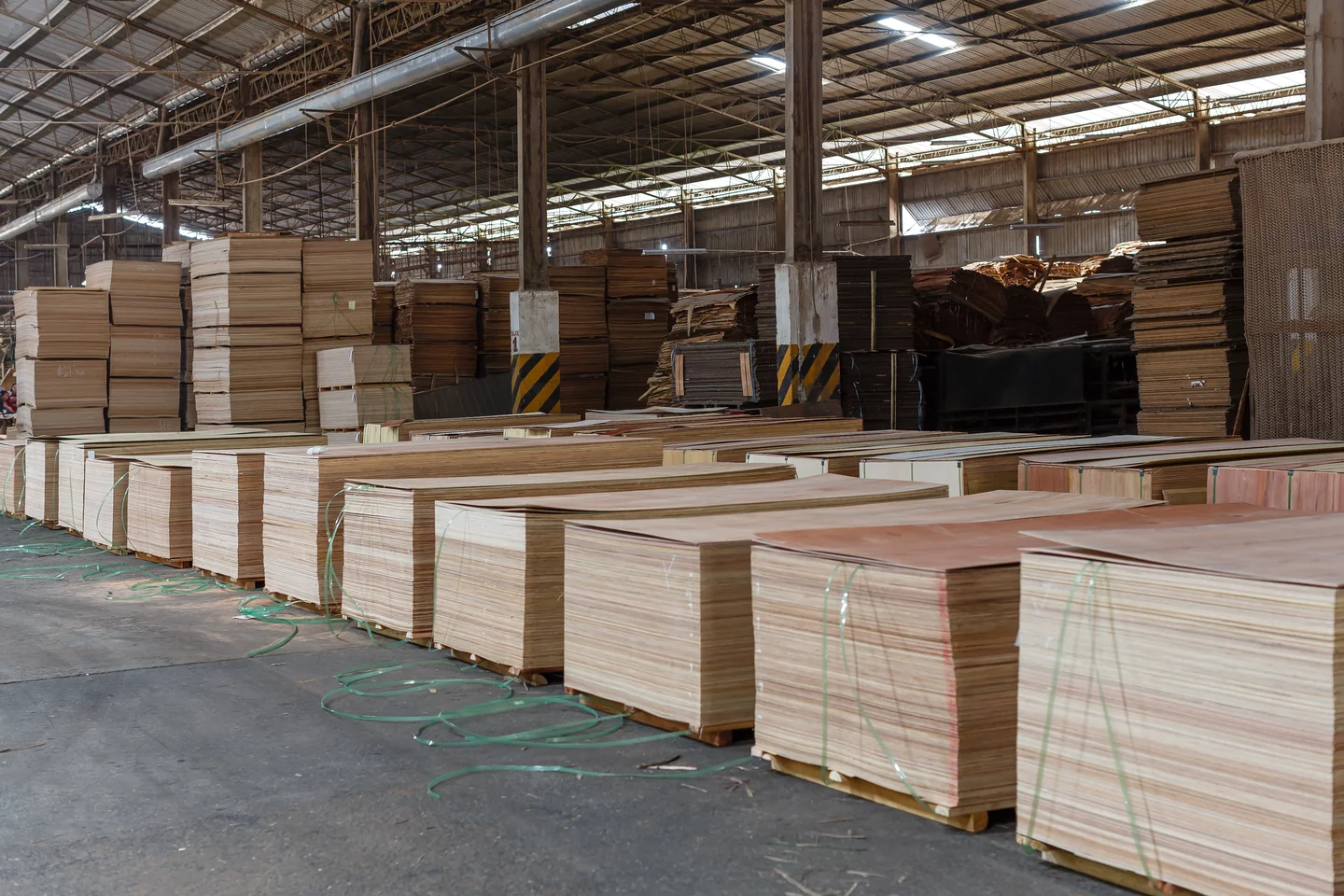
Start with the finished panel
Define the finished length and width, thickness range, thickness tolerance, surface specification, and expected product mix before selecting equipment. Record which dimensions are finished sizes and which include trimming allowance. Long panels can affect platen coverage, loading direction, support during transfer, and the floor space needed for cutting and stacking.
Describe the panel construction by veneer species or grade where applicable, veneer thickness, number of plies, and cross-ply sequence. Plies describe veneers, not press openings or daylights. Clarify the required bond and the buyer’s inspection method, including how surface condition, dimensions, and thickness variation will be assessed. End-use requirements and any applicable compliance criteria must come from the buyer and remain to confirm; no certification or installation suitability should be assumed from equipment selection alone.
| Target to define | Why it matters to equipment |
|---|---|
| Finished size and trim allowance | Sets usable platen area, loading orientation, and sizing plan |
| Thickness and variation | Informs opening clearance, pressing plan, and inspection |
| Veneer lay-up and ply count | Shapes assembly, glue distribution, and batch handling |
| Surface and bond acceptance | Defines process trials and buyer inspection criteria |
| Product mix and shift demand | Guides opening count, loading method, and line balance |
Translate construction into a process
For plywood flooring, face, core, and cross-core veneers are assembled in the required cross-ply order, with controlled adhesive application and joints. Lay-up is a separate operation from hot pressing. Depending on the mill’s process, a cold pre-press may help consolidate prepared lay-ups before they enter the hot press; it does not replace the hot press used to bond the panel.
Press selection follows the lay-up and product range. Platen dimensions must accommodate the intended loaded panel arrangement, with room for actual loading clearances and edge allowances. Daylight openings determine the vertical space available for each loaded batch; they are not veneer plies. The number of openings can influence batch capacity, but output also depends on complete cycle time, loading and unloading, product changes, and utilization.
Heating arrangement, controls, press frame, platens, and handling equipment should be specified as a coordinated scope. Pressure and total force need to be checked against the loaded area and the selected press design. In a multi-daylight press, force is not simply multiplied by the number of openings. Final force and structural requirements need engineering confirmation for the actual load arrangement.
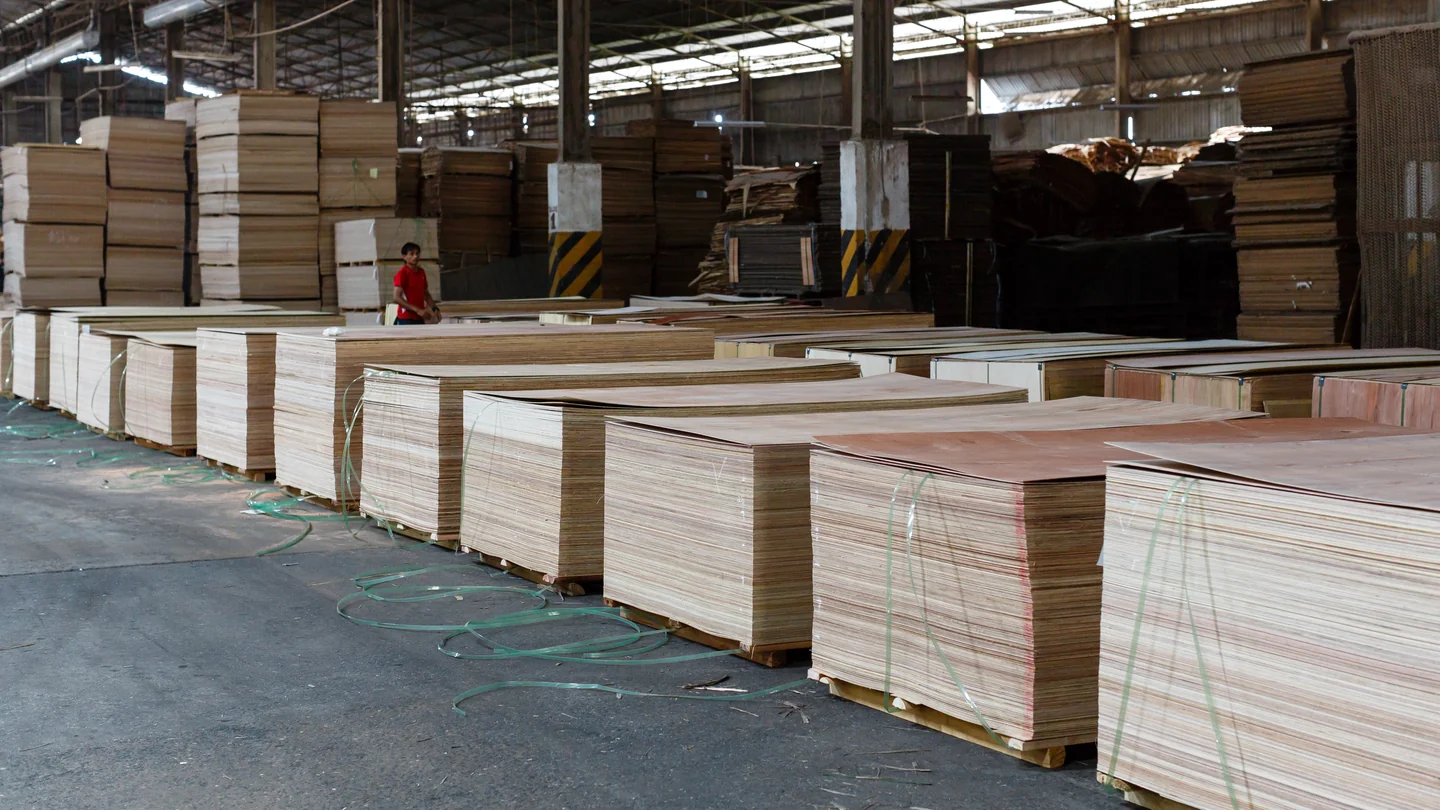
Match handling to panel dimensions
Long or heavy lay-ups need to remain supported and aligned as they move from assembly through pre-press, hot pressing, and outfeed. A batch loading system may suit a press that loads several openings together; other layouts may use sequential handling. Selection depends on opening pitch, loading clearance, press cycle, floor layout, and the amount of time the loader occupies the press.
Plan the complete path, not only the press. Confirm space and transfer interfaces for lay-up, pre-press if used, loading, unloading, cooling or conditioning as defined by the mill, trimming, inspection, and stacking. For existing equipment, record the platen and opening dimensions, control interfaces, loading direction, aisle clearances, and available utilities. Any equipment interface not documented is To confirm.
Prove the process with samples and measurable acceptance
Before finalizing a production configuration, agree how representative lay-ups and finished panels will be evaluated. A sample plan should identify the construction and dimensions tested, the process settings recorded by the mill, the measurement locations, and the inspection method. The product and process criteria must be set by the buyer and mill; equipment selection alone cannot establish panel performance.
Acceptance should distinguish machine functions from product results. For equipment, define observable checks such as loading position, transfer sequence, opening clearance, control response, and stacking interface. For panels, document the buyer’s agreed checks for dimensions, thickness variation, surface, and bond. Any numerical limits, test methods, or end-use compliance requirements not supplied in the project brief are To confirm. Treat estimated capacity as a planning estimate until verified with the intended product, full cycle definition, and agreed trial conditions.
Specify scope and sourcing clearly
A useful inquiry includes product drawings or dimension ranges, veneer construction, planned output by shift, current process sequence, press details if existing, factory layout, utility information, and the desired division of supply. State whether the project covers only a press section or also lay-up handling, loading, unloading, trimming, and stacking. This prevents assumptions about equipment that may sit outside the requested scope.
We help plywood mills specify and source equipment against the confirmed production brief and coordinate configuration questions with the relevant equipment supplier. Availability, dimensions, cycle assumptions, interfaces, and acceptance details remain subject to confirmation. Contact Peter at +86 151 9045 1115 or qdlookingforward@gmail.com to discuss a project.
Questions about this configuration
What information is needed to select a press for truck and trailer flooring panels?
Provide finished panel dimensions and thickness range, veneer construction and ply sequence, surface and bond acceptance criteria, product mix, expected shift demand, and the proposed process sequence. For an existing line, include press and handling dimensions, control interfaces, layout, and available utilities.
Does a multi-daylight press multiply force by the number of openings?
No. In a stacked press with equal loaded area transmitted through the series, press force is not multiplied by the number of openings. The actual load arrangement, frame, and cylinders require engineering confirmation.
Can equipment selection guarantee a flooring panel’s end-use compliance?
No. The buyer and mill must define applicable end-use requirements, test methods, and acceptance limits. Equipment configuration can be planned around those criteria, but it does not itself establish certification or product compliance.