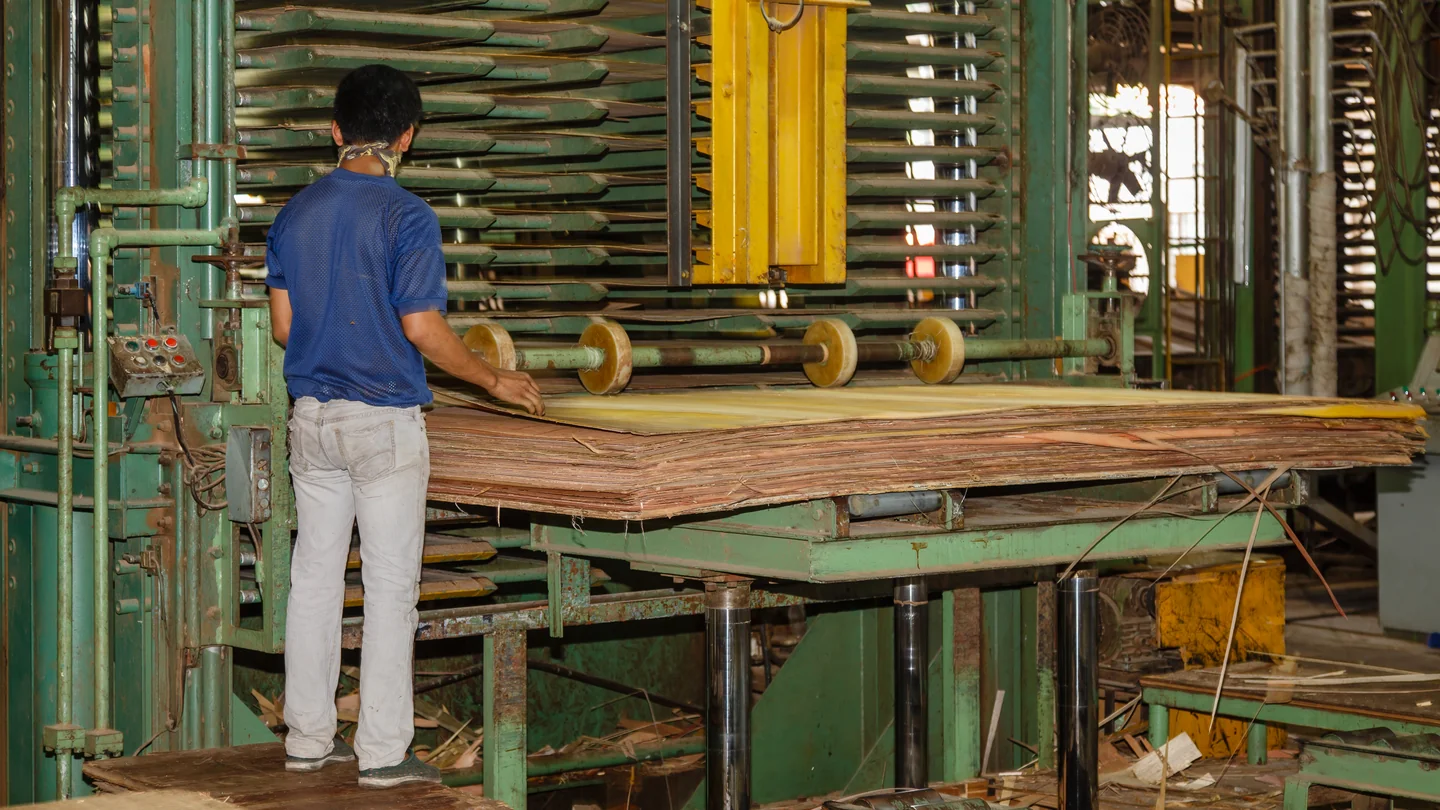
Moving from semi-automatic to automatic plywood press handling is a staged integration project, not simply a loader purchase. The right arrangement depends on the press, existing transfer equipment, panel format, operating sequence and available floor space. We help plywood mills define the required scope and source handling equipment to suit an existing line. A practical plan starts by documenting current conditions, then agrees how loading, press control, unloading and stacking will work together before installation and acceptance.
Survey the press and its interfaces
Record the press type, openings, daylight pitch, platen dimensions and usable loading clearances. Document how panels or lay-ups currently enter and leave each opening, including any manual steps, carts, transfer tables or partially automated equipment. Openings and daylights are press terms; plies describe the veneers in a panel.
Survey the route from lay-up to the press and from press outfeed to the next operation. Measure aisle widths, obstructions, floor levels, travel distances and available staging space. A layout should show equipment travel envelopes and service access, not just machine footprints. Whether a pit or other civil work is needed depends on the selected arrangement and site conditions; no layout should be assumed pit-free without review.
Review available electrical and control information, including the existing PLC, operator stations, press-ready signals and relevant safety circuits. Confirm what information is available from the press maker or site maintenance team. Missing drawings, signal definitions or clearances remain items to confirm before a retrofit design is finalized.
Define the handling sequence and capacity
Map the actual sequence for the product mix: staging the lay-up, presenting it to the loader, entering the selected opening, withdrawing the loading equipment, pressing, opening, unloading and transferring the panel to stacking or the next process. For plywood, the hot press receives assembled veneer lay-ups; veneer lay-up and hot pressing are distinct production steps.
Establish a measured press batch interval that includes the loading, closing, pressing, opening, unloading and related reset or travel time within the chosen measurement boundary. Do not count the same travel or reset time twice. Compare that interval with loader service time and downstream capacity. A faster loader alone cannot raise line output if press availability, upstream preparation or outfeed is the constraint.
For a shared loader serving multiple presses, check travel and service time against each press’s batch interval. A simple utilization estimate can help screen a concept, but overlapping calls and phase conflicts still need a scheduled sequence. Any planning figures should be identified as assumptions, with actual cycle times measured during the survey.
| Survey item | Why it matters | Evidence to record |
|---|---|---|
| Press geometry | Determines access and transfer envelope | Opening pitch, clearances, platen and travel limits |
| Batch sequence | Shows where handling time occurs | Observed steps and timed cycle boundaries |
| Panel and lay-up mix | Defines what must be handled | Formats, thickness range and batch arrangement |
| Controls and safety | Sets integration requirements | Available drawings, signals and interlocks |
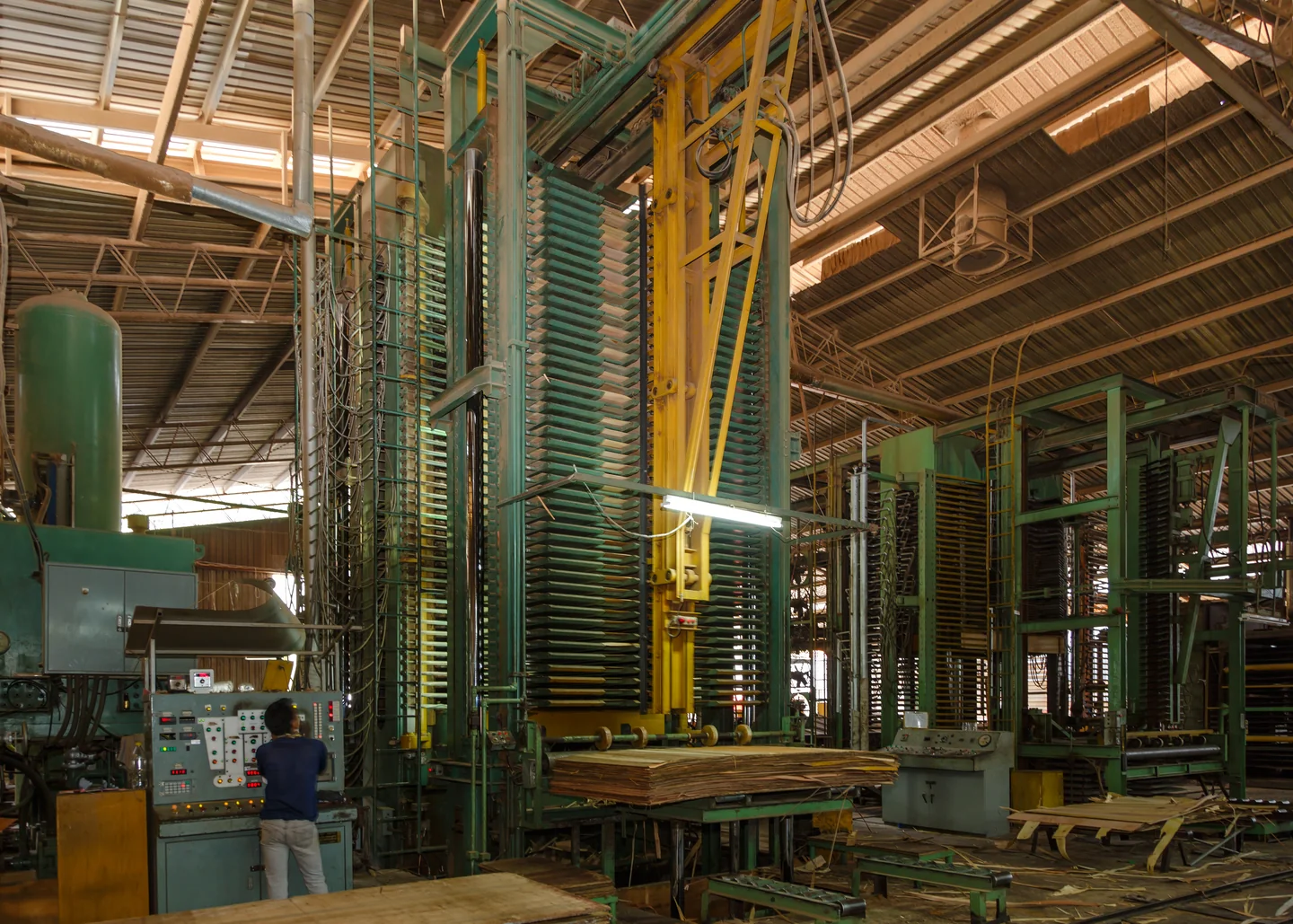
Design the control and safety handshakes
Agree the operating states before selecting control modifications: press available, press ready for loading, loader in position, transfer complete, equipment clear, press permitted to close, press open for unloading and unloading complete. The exact signals, logic ownership and fault responses must be confirmed with the existing press controls and site requirements.
Define how the system responds to a misaligned load, blocked transfer, interrupted cycle, loss of communication or emergency stop. Establish safe access, guarded zones, operator stations and recovery procedures as part of the engineering review. A signal list and sequence chart make responsibilities clearer; they do not replace site-specific safety assessment or validation.
Plan shutdown, installation and acceptance
Separate preparatory work from tasks that require press shutdown. Confirm connection points, cable routes, mechanical interfaces, access and any necessary site work in advance, then agree the shutdown window and installation sequence with the mill. The actual duration depends on the equipment scope and site readiness and should be established during project planning.
Acceptance criteria should cover the agreed product and operating sequence: repeatable transfer into and out of the press, correct handshake behavior, response to defined faults, operator and maintenance access, and recorded cycle observations under stated conditions. Agree the test method and responsibilities before work begins. Performance expectations require confirmation against the existing press, product mix and measured baseline.
Specify a practical retrofit scope
A retrofit may include loading, unloading, transfer tables, stacking interfaces, control changes or only selected portions of the handling route. We help mills specify and source equipment against the documented interfaces and operating needs. The scope should state what is supplied, what remains existing, which party handles controls and installation, and what information is still to confirm.
Avoid assuming a fixed labor reduction, output increase or civil-work outcome before the line is assessed. Compare options using measured cycle times, required staffing by task, downtime constraints and maintenance implications. Contact Peter at +86 151 9045 1115 or qdlookingforward@gmail.com to discuss the survey information and a possible scope.
Questions about this configuration
Can an existing press be automated without replacing its controls?
Possibly, but compatibility depends on the available signals, control architecture, documentation and safety requirements. Survey the press interfaces and agree signal ownership and fault behavior before deciding whether existing controls can be retained or changes are needed.
Can one loader serve more than one press?
It may be feasible when press locations, batch intervals and loader travel and service times align. The concept needs a timed schedule that accounts for competing requests and phase conflicts, plus confirmation of the physical route and each press interface.
Does automatic handling guarantee a labor or output improvement?
No. Outcomes depend on the existing process, product mix, bottleneck, operating plan and accepted scope. Establish a measured baseline and define acceptance conditions before estimating labor or output effects.