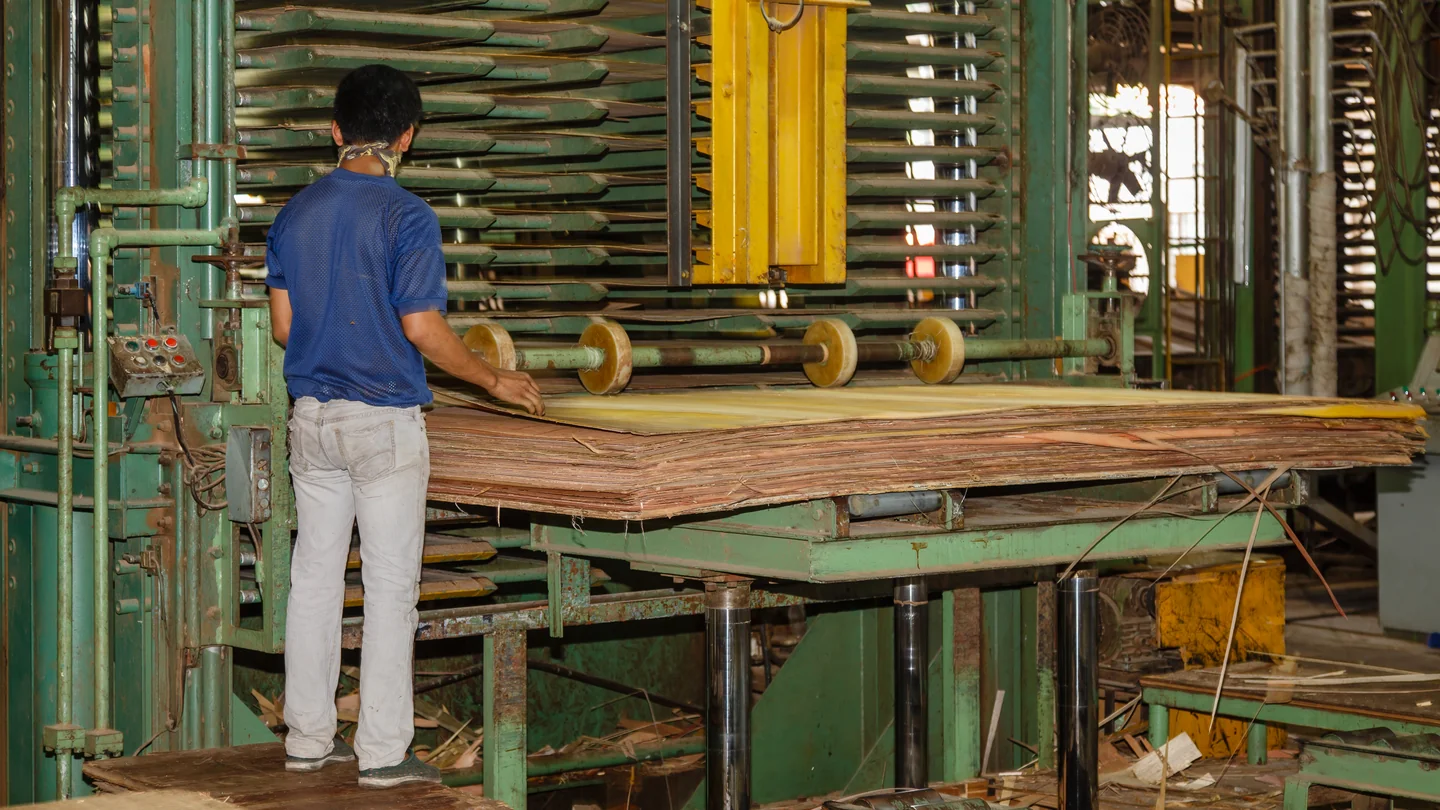
Adding automatic press handling to a crowded plywood mill is a layout and interface problem before it is an equipment-selection exercise. The right retrofit must fit the press, material route, operators, utilities and safety controls without creating a new bottleneck at the infeed or outfeed. We help plywood mills specify and source handling configurations around existing conditions, using measured clearances and operating sequences to identify workable options. Final dimensions, interfaces and performance remain subject to site review and confirmation.
Start with the existing press and floor plan
Survey the press and the surrounding work area before choosing a loader, unloader or transfer arrangement. Record platen dimensions, daylight count and pitch, opening and closing motion, press-table height, frame projections, existing guarding and the available approach paths. For a multi-daylight press, the handling concept must suit the actual loading method and opening sequence, not just the press’s nominal capacity.
Measure usable floor area, columns, walls, doors, drains, overhead obstructions and nearby equipment. Include the space needed for operators, maintenance access, panel stacks and any carts or conveyors. Note changes in floor level and possible travel-path conflicts. Drawings are useful, but verify critical dimensions on site; undocumented modifications and obstructions can invalidate a layout based on old plans.
Document the current material route from lay-up or pre-press through loading, hot pressing, unloading and stacking. Identify where work waits, where operators intervene and which direction panels must travel. Veneer plies describe the lay-up; press openings or daylights describe the press. Keeping these terms distinct helps prevent specification errors.
Fit handling to travel and loading sequence
In a limited footprint, the shortest path is not automatically the best path. Compare a direct infeed with arrangements that stage loads beside the press, use a transfer position or place the stacker at a different orientation. Check the full swept envelope of moving frames and loads, including the position during loading and unloading, not only the parked equipment footprint.
Map the sequence as a timed cycle: assemble or stage a batch, travel to the press, load, clear the press area, wait for the press-ready condition, unload, and transfer panels to the next operation. Measure real cycle components where possible. A shared loader may save floor space, but its travel and service time must fit the batch intervals of every press it serves; simultaneous demands can still cause queues.
An assumed planning example illustrates the output calculation: 20 effective openings × 1 panel per opening × (8 hours × 60 ÷ 10-minute complete cycle) × 0.8 utilization = 768 panels per shift. The 10-minute cycle must include loading, closing, pressing, opening, unloading and associated travel or reset measured within that interval. This is a preliminary estimate, not a production guarantee; use the actual product mix and observed cycles.
| Layout decision | Measure or verify | Why it matters |
|---|---|---|
| Infeed approach | Clear width and load orientation | Confirms load can reach the press |
| Loader travel | Route length and turning envelope | Affects cycle time and aisle conflicts |
| Press interface | Daylight pitch and loading height | Determines compatibility with the press |
| Outfeed position | Stack space and next-process route | Avoids transferring the bottleneck |
| Service access | Operator and maintenance clearance | Supports routine access and intervention |
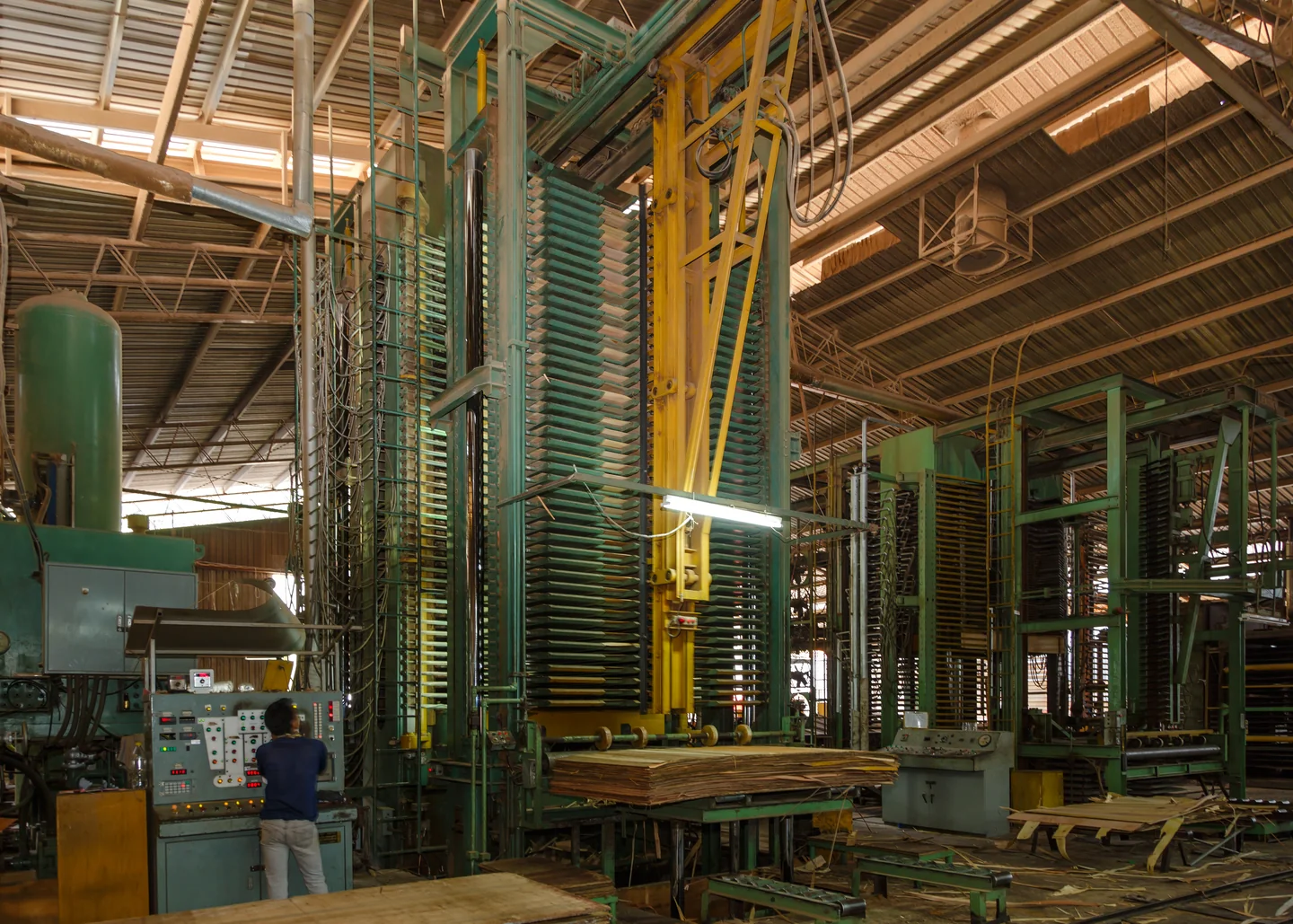
Define control and safety handshakes
Before specifying controls, record the existing press control architecture and available signals. Confirm how the press indicates ready-to-load, loading zone clear, load in position, unloading permitted, cycle active and fault or stop status. The automation sequence should prevent a handling movement from conflicting with press motion and should define what happens after an interrupted cycle or loss of a permissive.
Review guarding, access gates, emergency stops, operator stations and visibility at each working position. Identify which equipment controls which motion and how a stop condition is communicated across the retrofit boundary. The final risk assessment, safeguarding design and control responsibilities need engineering review for the specific machine and jurisdiction; a generic interface list is not a safety approval.
Plan installation, shutdown and acceptance
Agree the retrofit boundary before ordering: equipment supplied, mechanical modifications, electrical work, PLC changes, guarding, utilities and site responsibilities. Check floor loading and anchoring requirements with the responsible engineer, along with cable routes, power availability and access for delivery. Where space is tight, installation sequence and temporary storage can matter as much as the final footprint.
Build a shutdown plan around removal, installation, wiring, control checks and staged commissioning. Confirm when the press can be isolated and who authorizes restart. Acceptance should test the agreed operating sequence with representative loads, verify press-handling interlocks and stops, and record cycle observations, faults and outstanding items. Define the agreed acceptance criteria before the shutdown rather than assuming a universal output target.
Specify a practical, confirmable scope
A useful inquiry includes a dimensioned layout, press drawings or measured interfaces, product and batch formats, current handling method, observed cycle times, control information, utility details and photographs of the operating area. Mark measurements as confirmed, estimated or still to confirm. Where the information is incomplete, treat all unprovided data as To confirm rather than turning assumptions into design facts.
We help plywood mills specify and source equipment configurations for existing press lines. The proposed arrangement depends on the measured site, selected handling sequence and agreed supply boundary; equipment availability, modifications, interfaces and performance require confirmation. This page does not imply a blanket labor reduction, a pit-free installation or a guaranteed fit. Contact Peter at +86 151 9045 1115 or qdlookingforward@gmail.com to discuss the site information and next steps.
Questions about this configuration
Can automatic handling be added without expanding the press area?
Possibly, but the answer depends on the press envelope, travel route, stack locations, operator access and safety clearances. A measured layout review is needed to determine whether the arrangement fits; compact equipment alone does not establish that the complete operating sequence will fit.
Can one loader serve more than one press in a tight layout?
It may be possible when press locations, travel time and batch intervals are compatible. Compare the complete service time for each press and consider overlapping demands, traffic conflicts and recovery from interruptions. A shared unit should not be selected on travel distance alone.
What information is needed before a retrofit can be specified?
Provide press dimensions and opening arrangement, a measured floor plan, material formats and route, current loading sequence, cycle observations, available utilities and existing control-interface information. Mark unknown dimensions and signals for confirmation before final equipment selection.