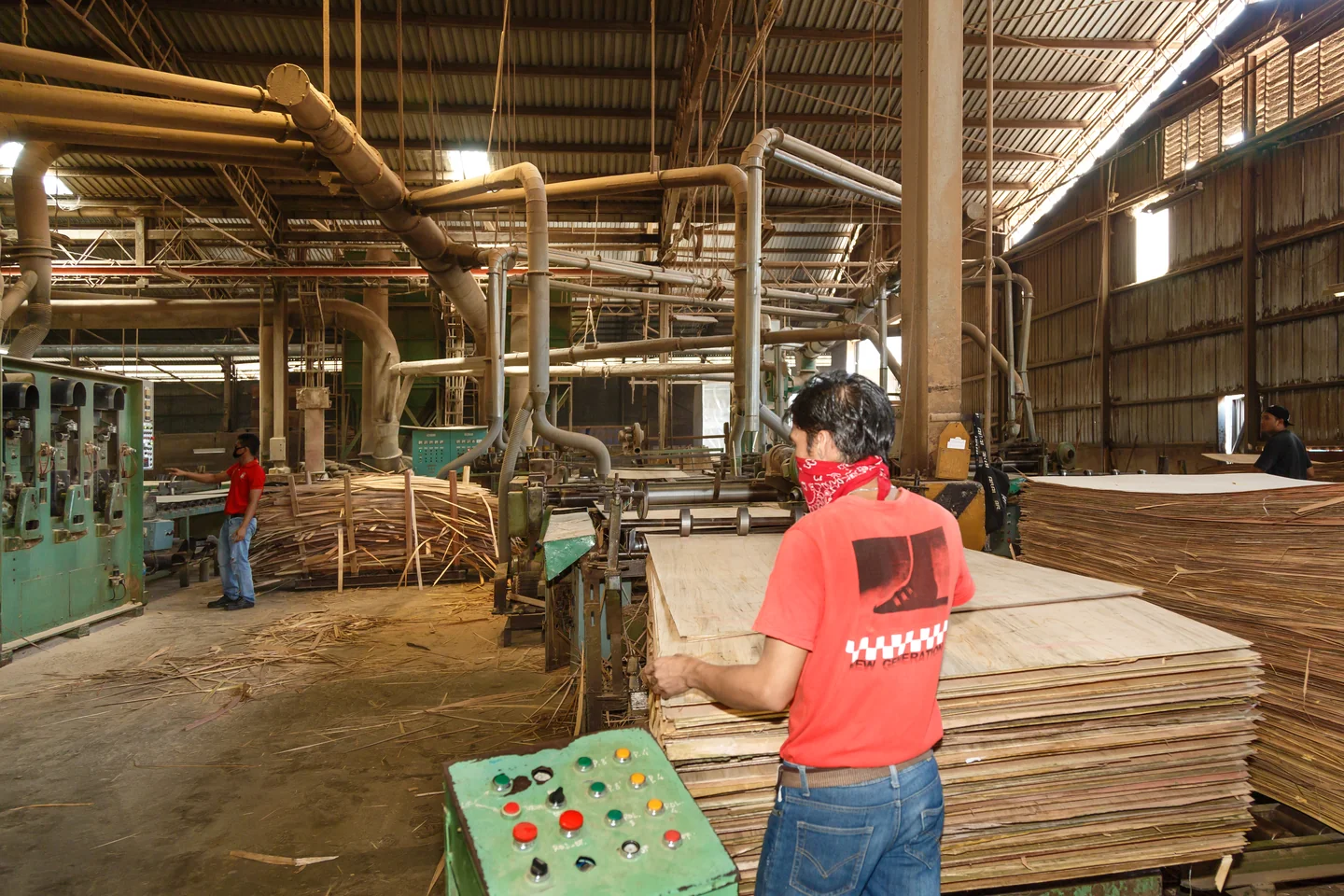
An automatic plywood edge trimming saw removes uneven overhang from pressed panels and cuts their edges to a defined finished size. In a plywood mill, it typically receives panels from a press-line outfeed or an intermediate stack, references the panel against a controlled datum, then transfers trimmed sheets toward sorting, stacking, or sanding. The right configuration depends on panel dimensions, trim allowance, feed direction, production mix, and how the saw must connect to existing handling equipment.
Purpose and place in the line
Pressing and trimming are separate operations. After hot pressing, panel edges may include veneer overhang or irregular margins; a trimming saw cuts these margins so the sheet conforms to the specified finished dimensions. It does not assemble veneer lay-ups or perform the hot-pressing operation.
A standalone saw may be supplied with infeed and outfeed handling, while a line-integrated arrangement can connect with upstream unloading and downstream sorting or stacking. The boundary of supply matters: confirm whether panel separation, turning, buffering, reject handling, and stacking are included or remain existing mill functions.
Feed direction, datum, and panel control
Describe the material route from the operator’s or line’s viewpoint: which edge enters first, whether panels travel lengthwise or widthwise, and where the machine discharges them. Confirm whether the panel remains in one orientation or is turned between cuts. These details determine saw arrangement, transfer direction, and the space needed for conveyors and access.
The trimming reference may be a side guide, a fixed fence, a positioning system, or another engineered arrangement; the specific method is to confirm. State which panel edge is used as the datum and how the opposite edge is located. If the incoming sheet is not square or its edges vary, explain whether the goal is a defined final size, equal removal from both sides, or another agreed result.
Selection factors
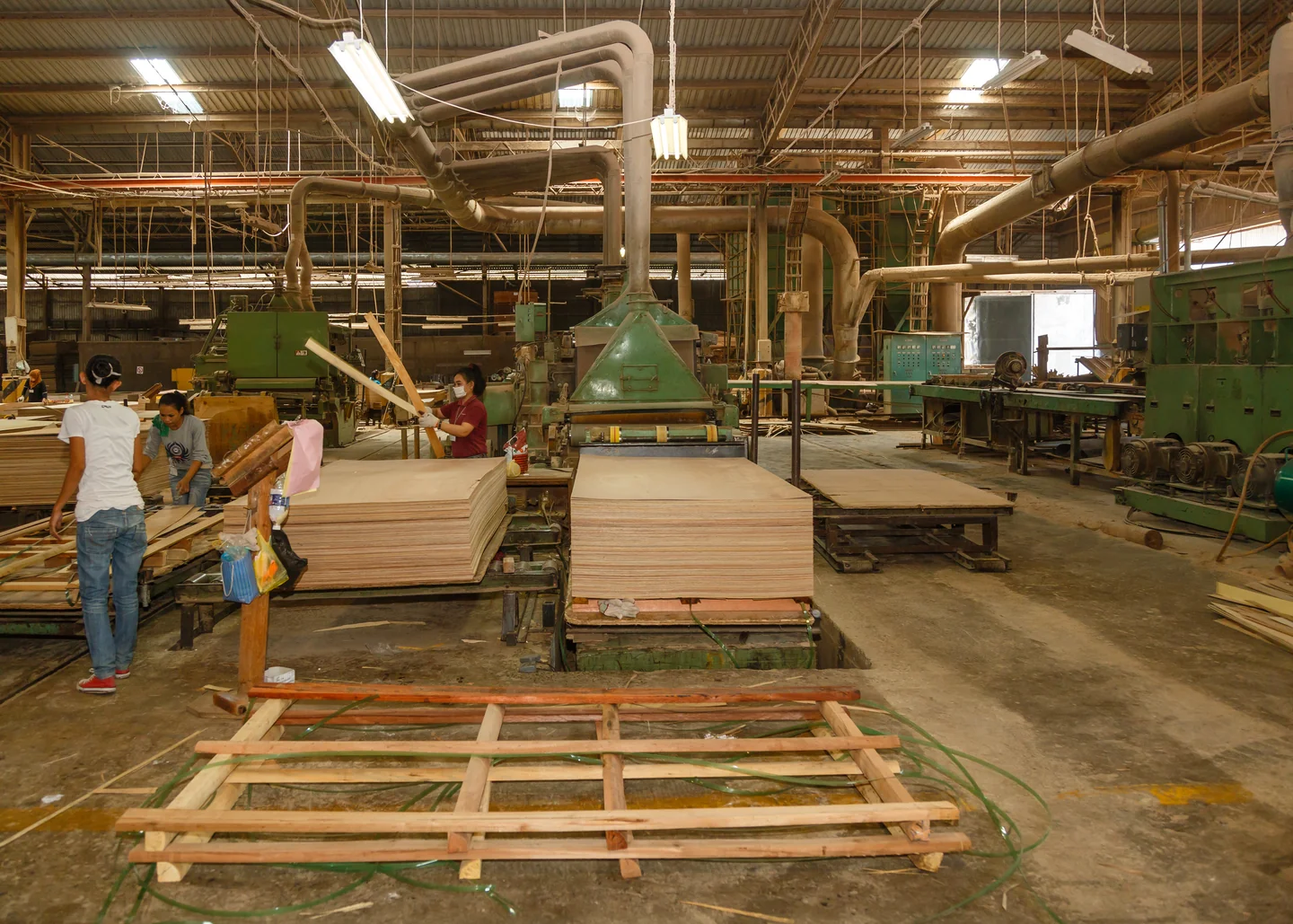
The saw configuration should reflect the full product range, not only the most common sheet. Provide minimum and maximum panel length, width, and thickness, together with the intended finished dimensions and trim allowance on each edge. Identify panel construction or surface constraints that could affect support, transfer, or cut quality; machine-specific compatibility is to confirm.
Capacity depends on more than cutting speed. Provide the expected panels per shift, product mix, shift pattern, and upstream and downstream cycle times. Explain whether sheets arrive individually, in batches, or from a stack that needs separation. Any proposed output is to confirm against the complete handling cycle and operating conditions; no production rate is assumed here.
| Decision item | RFQ information | Why it matters | | Panel envelope | Minimum and maximum length, width, thickness | Defines handling and cutting range | | Finished size | Target dimensions and tolerances | Sets cut positions and verification needs | | Trim allowance | Expected edge material to remove | Informs cut arrangement and waste handling | | Feed orientation | Entry edge, travel direction, exit direction | Determines layout and line interface | | Production plan | Product mix and target panels per shift | Supports capacity and buffer review |
Integration, controls, and layout
For an existing line, document the outfeed height, conveyor width, available floor space, transfer gaps, and the locations of columns, pits, guards, and operator access. Clarify how panels are released to the saw and how the next machine receives them. If the saw is to connect to existing controls, identify the control system and the signals or interlocks expected; the interface design is to confirm.
For a new installation, establish the sequence from press unloading through trimming to the next operation. Consider where panels accumulate during a short interruption, how trimmed offcuts are collected, and how operators inspect and clear the process. Layout drawings should show the panel envelope, machine footprint, transfer direction, access zones, and required connections. Utilities, electrical details, guarding, and safety provisions are to confirm for the selected equipment and site.
RFQ information and sourcing role
A useful inquiry includes product drawings or sketches, representative panel sizes, trim allowance, datum choice, feed and discharge direction, target throughput, and a plan of the surrounding line. For retrofit projects, include measured conveyor and machine elevations, available footprint, photos of the interfaces, and a description of current handling steps. Mark any unavailable figures as to confirm rather than relying on assumptions.
We help plywood mills specify and source equipment against the required process, handling arrangement, and site interface. The final configuration, technical scope, and machine data must be confirmed with the selected supplier. Contact Peter at +86 151 9045 1115 or qdlookingforward@gmail.com to discuss an application or prepare an RFQ.
Questions about this configuration
Where is an edge trimming saw installed in a plywood line?
It is generally positioned after panel pressing and unloading, where it can receive sheets and send trimmed panels to a downstream operation such as sorting, stacking, or sanding. The exact location depends on the existing line layout and handling sequence.
What dimensions should I provide when requesting a quotation?
Provide the minimum and maximum incoming panel length, width, and thickness; the required finished dimensions; and the expected trim allowance on each edge. Also state feed orientation, target output, and any dimensional tolerances. Machine limits are to confirm.
Can the saw be connected to an existing press-line outfeed?
Potentially, subject to a review of conveyor elevation, transfer direction, panel spacing, available footprint, controls, and downstream handling. Provide measured interface data and a layout drawing so the proposed connection can be evaluated; compatibility is to confirm.