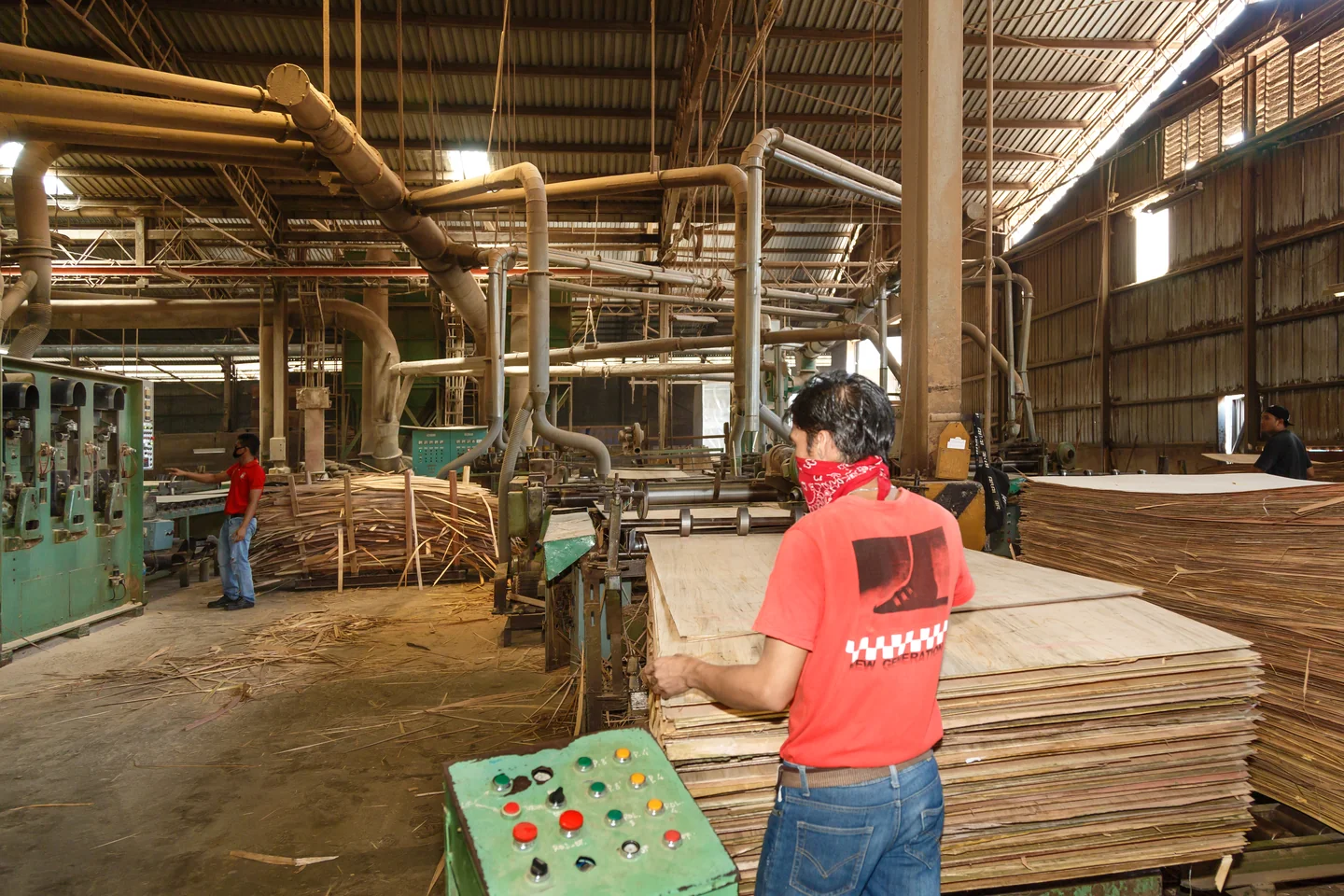
Adding edge trimming to an existing press line is an integration project, not simply a saw purchase. The trim station must receive panels in a known orientation, accommodate the line’s product range and cycle, and return finished panels without creating a queue at the press outfeed. We help plywood mills specify and source equipment around the installed line. A practical retrofit starts with measured conditions and interfaces, then defines the material path, controls, shutdown work and acceptance criteria before equipment is selected.
Survey the press outfeed and product
Record the press discharge height, panel orientation, transfer direction, available floor space and any columns, guards or other obstructions. Measure the route from press opening and unloading through existing conveyors, turning or sorting stations, and stacking. Include access for maintenance and removal of trim waste; a proposed saw position must work in the real layout, not just on a plan.
Define the panel envelope from actual production: length, width, thickness range, trim allowance, edge condition, and whether sizes or grades change during a shift. Confirm how panels arrive—single sheets or a batch—and whether they need turning or alignment before cutting. Openings and daylights are press terms; plies refer to veneer layers. Do not assume press openings determine the number of panels the trimmer receives at once.
| Survey item | Why it matters |
|---|---|
| Panel dimensions and range | Sets handling and cutting envelope |
| Outfeed height and direction | Determines transfer and alignment |
| Measured cycle and batch | Checks capacity and buffering |
| Floor route and obstructions | Tests fit, access and waste removal |
| Existing control signals | Defines integration work |
Map travel, loading and trimming sequence
Document the complete movement sequence from press unloading to trimmed-panel discharge. Identify each handoff, accumulation point and operator task. Measure actual transfer and service times, including any turns, indexing, batch separation or resetting that occurs within the cycle. Compare the trimmer’s expected service interval with the press’s discharge pattern; a faster saw cannot compensate for a congested infeed or inadequate outfeed stacking.
Choose a defined trimming arrangement for the product: which edges are cut, how the panel is referenced, and how finished dimensions are verified. Confirm where edge waste goes and how operators can clear it without entering hazardous areas. Where products vary, agree the recipe or changeover method and who selects or verifies the dimensions. Capacity figures remain estimates until the actual sequence and product mix are measured.
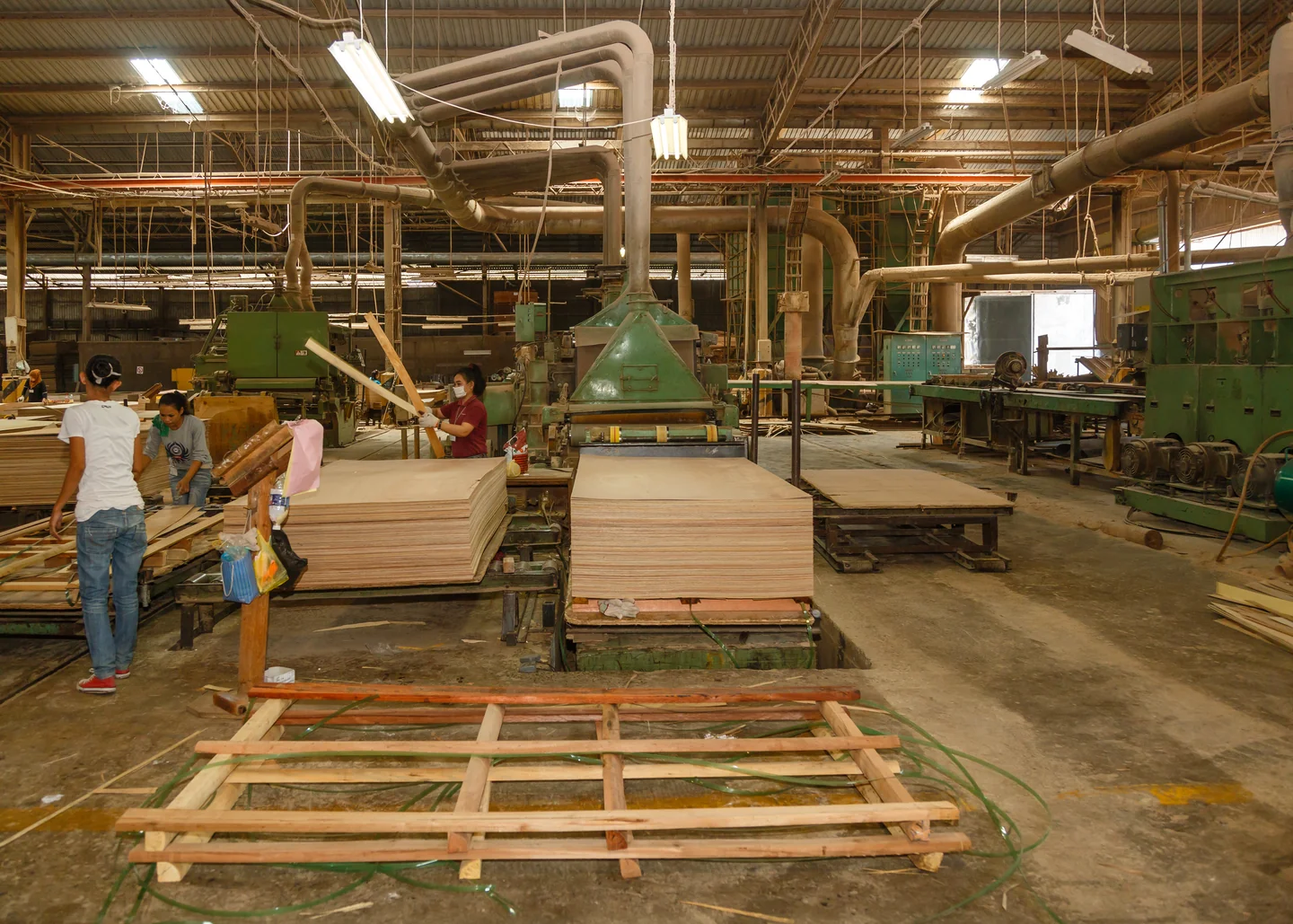
Specify mechanical and control interfaces
Check conveyor elevations, usable widths, panel support, transfer gaps, locating method and required alignment before finalizing the equipment interface. Consider whether panels are flat and stable enough for the proposed transfer and cut sequence. The arrangement may require infeed accumulation, squaring or a turner, but these should be included only when the surveyed product flow calls for them.
Map the existing PLC and operator controls: press-ready or discharge status, conveyor permissives, trimmer-ready, cycle-start request, completion, fault, emergency-stop circuits and restart conditions. Agree which system owns each command and what happens if the trimmer is unavailable or a panel is not correctly positioned. Safety functions and electrical design must be confirmed for the specific installation by responsible engineering personnel; a list of signals alone is not a safety design.
Plan installation, shutdown and acceptance
Plan site work around the mill’s approved shutdown window. Before installation, confirm foundations or support requirements, power and other utilities, cable and guarding routes, access for delivery, and interfaces with existing equipment. Define which existing conveyors, guards or controls are modified and who is responsible for each task. The scope and duration depend on the plant condition and agreed work; no blanket labor or pit-free installation promise is appropriate.
Set acceptance criteria before ordering. They can cover the agreed panel range, trim dimensions and quality checks, transfer sequence, interlock behavior, fault recovery, waste handling, operator instructions and documentation. Test the integrated sequence under agreed conditions, record exceptions, and close them before routine production handover. Any output target should be tied to a defined product, measured cycle and operating assumptions rather than treated as a universal guarantee.
Make the retrofit decision from measured evidence
Compare the proposed arrangement with the existing bottleneck: press discharge, transfer, trimming, sorting or stacking. A retrofit is useful only if the new station fits the flow and its interfaces are understood. We help plywood mills specify and source a configuration suited to the surveyed requirement; equipment scope, controls, installation responsibilities and acceptance conditions should be documented explicitly. All unprovided site data and operating assumptions are To confirm.
Questions about this configuration
Can an edge trimmer be placed directly after any hot press?
Not without checking the discharge geometry, panel orientation, handling sequence, available space and required cycle. Some lines need transfer, alignment or buffering between the press and saw. The site survey determines the suitable arrangement.
Does trimming capacity need to match the press cycle exactly?
It should be evaluated against the actual discharge pattern and product mix, including transfer, positioning, cutting and outfeed time. A buffer may separate short variations, but it cannot resolve a persistent capacity mismatch or downstream blockage.
What should be included in retrofit acceptance?
Agree the panel range, trim dimensions and quality checks, material sequence, control and safety handshakes, fault recovery, waste handling, and documentation before work begins. Verify the integrated operation under the agreed conditions and record any outstanding actions.